

Who are the PCP WISE partners driving innovation in water management and climate resilience across Europe through Pre-Commercial Procurement?
Our Partner Interview Series highlights the leading organisations in the PCP WISE consortium, showcasing their expertise, contributions, and key roles in the project.
Each partner also shares its vision of how PCP WISE advances the European Green Deal’s objectives—whether by leveraging Environmental Observation (EO) data to tackle critical challenges or pioneering innovative governance and procurement approaches like PCP.
🔍 Discover our latest interview to learn more about IEEC (Institut d’Estudis Espacials de Catalunya) and its impact!
Briefly introduce your organisation
The Institute of Space Studies of Catalonia (IEEC – Institut d’Estudis Espacials de Catalunya) is a non-profit public-sector foundation established in February 1996 and currently comprising around 270 employees and affiliated members. Governed by a Board of Trustees that includes the Generalitat de Catalunya, the University of Barcelona (UB), the Autonomous University of Barcelona (UAB), the Polytechnic University of Catalonia (UPC), and the Spanish National Research Council (CSIC), the IEEC is also a recognised research centre within the CERCA system. The Institute conducts advanced research, development, and technological innovation focused on the study of the Cosmos and the Earth, and holds leading responsibilities in numerous national and international space missions, including key roles in ESA missions such as Ariel, LISA, PLATO, CHEOPS, Gaia, Euclid, and SMOS. Its research activity is organised into four units associated with its trustee universities and spans Astrophysics and Cosmology, Earth Observation and Navigation, and Space Technologies. Within Earth Observation, the IEEC leads and participates in major European initiatives, including the Interreg Sudoe AgroSpace project, the Horizon Europe PCP WISE project on space-based water management solutions, and the ESA Phi-Lab Spain programme. In addition, the IEEC hosts the Area for the Promotion of the Space Sector of Catalonia (APEC), the governmental reference body responsible for implementing the Catalan Space Strategy. Through APEC, the IEEC promotes R&D&I, talent retention, infrastructure development, and the creation of space-based services and applications, while actively engaging with public, industrial, and international stakeholders, including the European Commission, EUSPA, and ESA. The Institute also plays an active role in international networks such as NEREUS, EURISY, and the Space Climate Observatory, reinforcing its position as a key actor in the European and global space ecosystem.
Introduce the team working on PCP WISE within your organisation
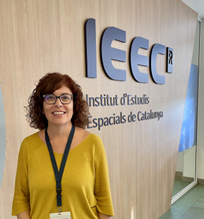 Estefania Blanch, Earth Observation Manager at the Area for the Promotion of the Space Sector of Catalonia (APEC) within the Institute of Space Studies of Catalonia (IEEC), specializes in EO project management and stakeholder engagement. She coordinates the Earth Observation Use Case Ideas Competition under the Catalan Space Strategy and leads the identification and implementation of practical EO use cases for industry, research teams, and public administrations. She currently coordinates a case study within the Horizon Europe PCP WISE project (GA No. 101182917) on advanced water intelligence for climate resilience and manages research projects on EO-based fertilization efficiency. She also contributes to the definition of new Earth observation missions under the Catalan Space Strategy.
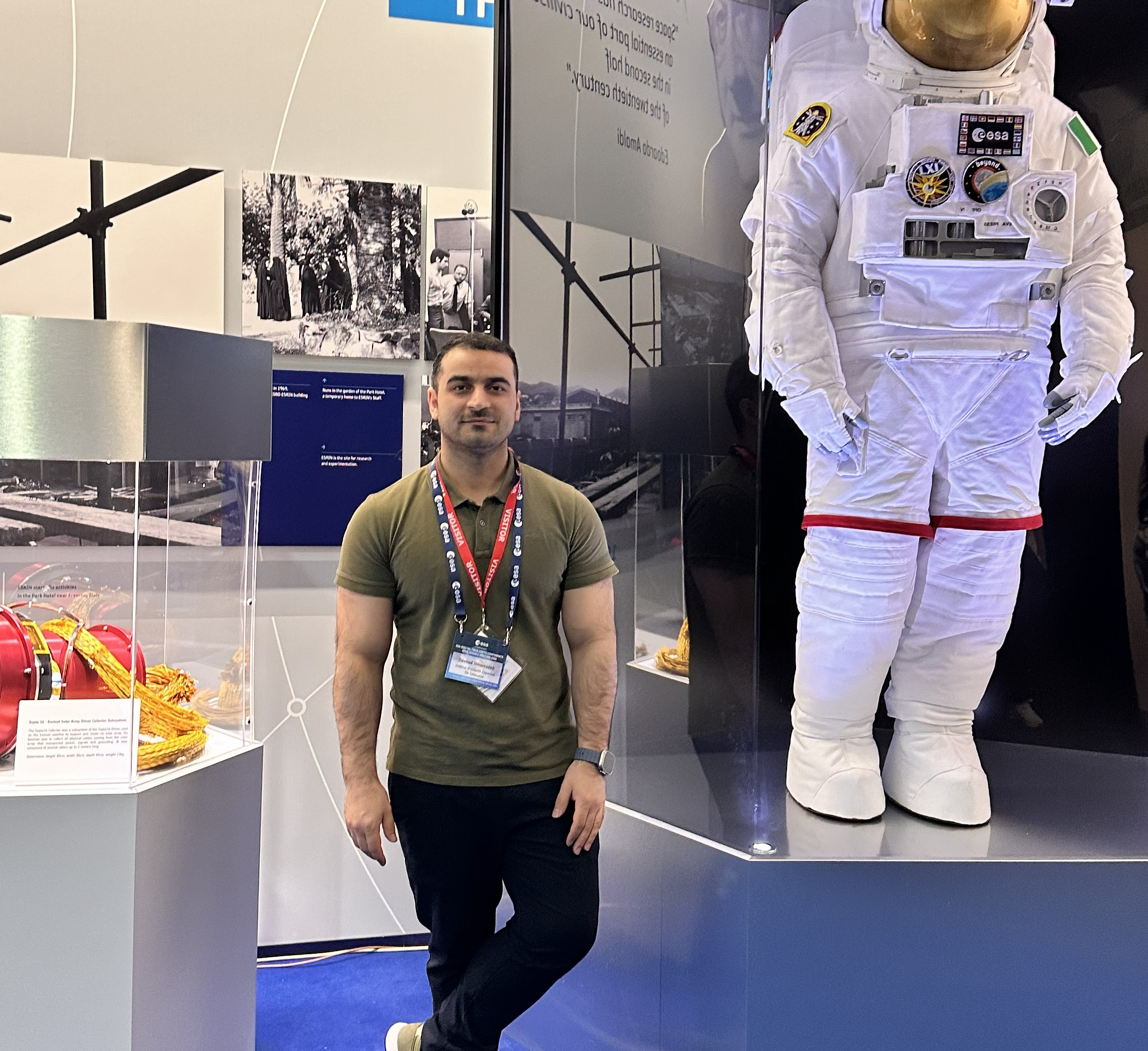 Davoud Omarzadeh, Earth Observation Project Manager at the Area for the Promotion of the Space Sector of Catalonia (APEC) within the Institute of Space Studies of Catalonia (IEEC), is an interdisciplinary researcher with training in Geography (BSc), GIS and Environmental Remote Sensing (MSc), and Complex Systems and Network Science (PhD, final semester). His work focuses on satellite and aerial remote sensing and GeoAI for water-related challenges, including drought, lake dynamics, and climate change impacts, with a particular emphasis on the Lake Urmia Basin. He has authored over 20 peer-reviewed publications and actively contributes to European innovation ecosystems, currently coordinating a case study within the Horizon Europe PCP WISE project (GA No. 101182917) and supporting the development of future Earth observation missions under the Catalan Space Strategy.
What is your organisation’s role in the project? What unique contribution does it bring to PCP WISE?
Our institution contributes to PCP WISE by providing expertise in Earth observation and climate services, supporting the definition and coordination of a use case focused on drought monitoring, soil moisture assessment, and sustainable water management. We help translate public-sector needs into technical requirements and participate as a member of the Technical Evaluation Committee (TEC) in the assessment of solutions. In addition, we leverage our ecosystem network for dissemination, coordinated the use-case kick-off meeting, and supported local matchmaking activities in Spain. Our unique contribution lies in bridging advanced satellite technologies with real operational needs of public authorities.
To what extent do you think PCP WISE will contribute to enhance Europe’s ability to adapt to and mitigate the effect of climate change?
PCP WISE will strongly enhance Europe’s ability to adapt to climate change by enabling public authorities to use advanced, satellite-based tools for water monitoring, risk prevention, and climate resilience. From our position at IEEC and in Catalonia as a region highly exposed to drought, water scarcity, and climate extremes, we are aware of these challenges and actively work to complement major European initiatives. In this context, we contribute by supporting innovation and by providing access to satellite data from regional space and Earth observation missions, such as the Menut mission, developed under the Catalonia NewSpace Strategy. By linking European-scale innovation with regional EO capabilities, PCP WISE helps deliver scalable, climate-resilient solutions with real impact.
To what extent do you think Environmental Observation (EO) and Innovation Procurement (IP) can help develop innovative solutions for water management and climate resilience across Europe?
Environmental Observation (EO) and Innovation Procurement (IP) are highly effective in driving innovative solutions for water management and climate resilience across Europe. Through our close contact with public authorities, water managers, and agricultural stakeholders, we gain a strong understanding of end-user needs and operational constraints. This knowledge feeds directly into the project’s requirement and criteria definition, guiding solution providers to develop tools that address real challenges. At the same time, involving public buyers throughout the procurement process ensures that the resulting solutions are fit for purpose and can be effectively procured, adopted, and deployed at regional and European levels.


