

Who are the PCP WISE partners driving innovation in water management and climate resilience across Europe through Pre-Commercial Procurement?
Our Partner Interview Series highlights the leading organisations in the PCP WISE consortium, showcasing their expertise, contributions, and key roles in the project.
Each partner also shares its vision of how PCP WISE advances the European Green Deal’s objectives—whether by leveraging Environmental Observation (EO) data to tackle critical challenges or pioneering innovative governance and procurement approaches like PCP.
🔍 Discover our latest interview to learn more about the University of Twente and its impact!
Briefly introduce your organisation
The University of Twente ITC Faculty (ITC) is a globally recognised academic institute specialising in Earth Observation (EO), geospatial science, and environmental modelling, with a strong focus on addressing societal challenges related to water, climate, and sustainability.
As part of the University of Twente, ITC combines cutting-edge research with capacity development, delivering advanced education, scientific innovation, and operational solutions in over 100 countries.
ITC’s core strengths lie in the development of Earth Observation (EO)-based monitoring systems for water resources, climate risks, and ecosystems. The organization integrates satellite data with in-situ measurements and modeling approaches to generate robust environmental intelligence. It also possesses deep expertise in hydrology, water quality, land–atmosphere interactions, and climate resilience. In addition, ITC has a strong track record in international projects and policy support, demonstrated through collaborations with organizations such as the European Space Agency, the European Commission, and a wide range of global partners.
A distinguishing feature of ITC is its ability to bridge science, technology, and application, translating advanced EO methods into operational services and decision-support tools for governments, industry, and international organisations.
Within PCP WISE, ITC contributes this integrated perspective, ensuring that solutions are not only innovative but also scientifically robust, scalable, and fit for real-world deployment.
Introduce the team working on PCP WISE within your organisation
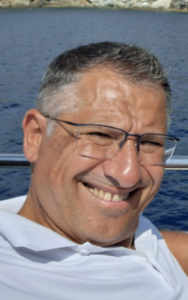
Suhyb Salama is an Associate Professor specialising in remote sensing applied to water systems. His research focuses on the use of Earth observation data to analyse hydrology and water quality, combining physical approaches with hybrid methods incorporating artificial intelligence. He is also interested in the validation of satellite products and the quantification of associated uncertainties, as well as the operational implementation of large-scale services based on these technologies. He is actively involved in international projects and contributes to the development of environmental indicators and validation frameworks in the field of water resources management.
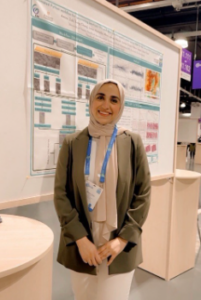
Amira Ahmed is a postdoctoral researcher specialising in hydrology and climate risk assessment. Her work focuses on hydrological modelling and the analysis of hazards such as droughts, floods and land subsidence, across different spatial scales. She develops integrated approaches combining multi-source data, including artificial intelligence, in situ measurements, Earth observation and reanalysis data. She is also interested in the design of impact-oriented environmental indicators to support decision-making. As part of the PCP WISE project, she is responsible for model and data integration, as well as validation activities.

Yijian Zeng is an Associate Professor in hydrological remote sensing. His research focuses on soil–atmosphere interactions and the modelling of soil–vegetation–atmosphere transfers, with a particular emphasis on the development of advanced physical models, such as the STEMMUS-SCOPE framework. He also works on the assimilation of satellite data and their comparative evaluation, as well as on environmental modelling at different scales. As part of the PCP WISE project, he contributes to benchmarking based on physical approaches
What is your organisation’s role in the project? What unique contribution does it bring to PCP WISE?
The University of Twente ITC Faculty acts as a scientific and methodological anchor within PCP WISE, focusing on the development, validation, and benchmarking of EO-based environmental intelligence services.
Its core responsibilities include designing a technology-agnostic validation framework that can be applied across competing PCP solutions, ensuring both comparability and fairness in evaluation. It is also responsible for guaranteeing the physical consistency and scientific robustness of Earth Observation–derived indicators, so that outputs remain credible and defensible. In addition, it integrates multi-source data streams—such as satellite observations, in-situ measurements, and reanalysis datasets—into a coherent analytical framework. Another key role is supporting Technology Readiness Level (TRL) progression, guiding solutions from early-stage prototypes through to fully operational services.
Its unique contribution lies in combining several areas of expertise that are rarely found together. It has a strong grounding in physics-based hydrological modelling, complemented by proven experience in the development and validation of Earth Observation algorithms. It also brings extensive experience in capacity building and the deployment of operational EO services on a global scale. Finally, it plays a neutral benchmarking role, ensuring that the evaluation of supplier solutions is conducted in a fair, transparent, and scientifically rigorous manner.
To what extent do you think PCP WISE will contribute to enhance Europe’s ability to adapt to and mitigate the effect of climate change?
PCP WISE has the potential to significantly strengthen Europe’s capacity to respond to climate change by addressing a critical gap: the translation of EO data into actionable, reliable, and scalable climate services.
Key contributions include:
- Enabling early warning and monitoring of climate risks (floods, droughts, heat stress, land subsidence)
- Supporting evidence-based decision-making through harmonised indicators
- Reducing uncertainty in environmental intelligence via robust validation frameworks
- Accelerating innovation uptake through pre-commercial procurement mechanisms
In particular, the PCP structure ensures that multiple competing solutions are developed and tested, leading to higher-quality, market-ready innovations.
To what extent do you think Environmental Observation (EO) and Innovation Procurement (IP) can help develop innovative solutions for water management and climate resilience across Europe?
Earth Observation (EO) and Innovation Procurement (IP) together establish a powerful and structured innovation pipeline that effectively connects scientific capability with operational deployment. EO provides synoptic, repeatable, and scalable observations across Europe, enabling consistent environmental monitoring at multiple spatial and temporal scales. It also offers access to long-term datasets essential for climate trend analysis, supports the monitoring of ungauged or poorly instrumented regions, and enables integrated analysis across land, atmosphere, and water systems.
Innovation Procurement complements these capabilities by driving demand-led innovation that is closely aligned with public sector needs. It facilitates structured risk-sharing between public buyers and suppliers, supports rapid prototyping and iterative testing, and accelerates the scaling of promising solutions. Importantly, it maintains competitive development processes, preventing vendor lock-in.
Together, EO and IP bridge the gap between research and real-world application, enabling robust, user-oriented climate services while strengthening Europe’s innovation ecosystem in environmental intelligence.


