

Who are the PCP WISE partners driving innovation in water management and climate resilience across Europe through Pre-Commercial Procurement?
Our Partner Interview Series highlights the leading organisations in the PCP WISE consortium, showcasing their expertise, contributions, and key roles in the project.
Each partner also shares its vision of how PCP WISE advances the European Green Deal’s objectives—whether by leveraging Environmental Observation (EO) data to tackle critical challenges or pioneering innovative governance and procurement approaches like PCP.
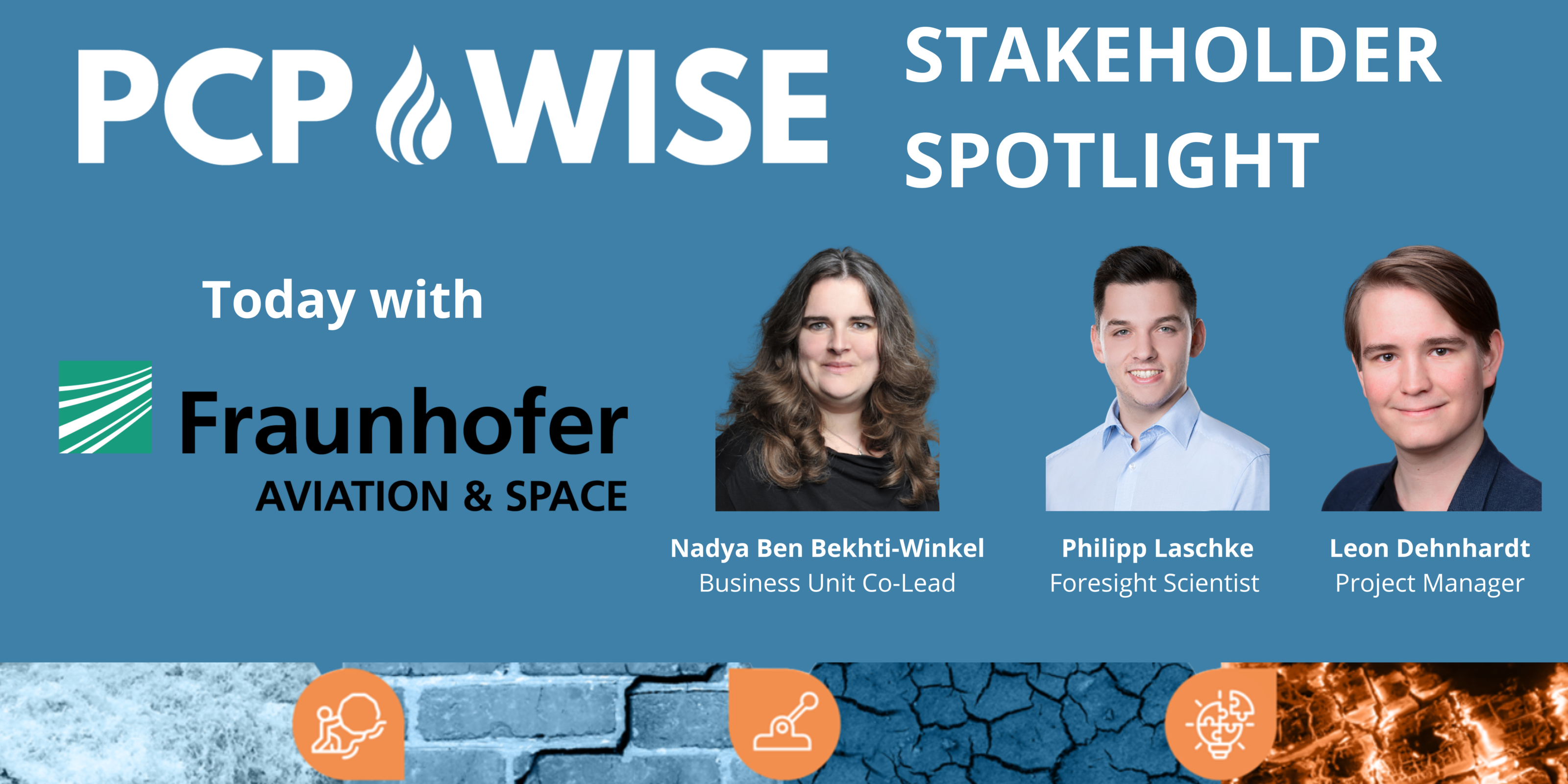
🔍 Discover our latest interview to learn more about Fraunhofer AVIATION & SPACE and its impact!
Briefly introduce your organisation
Bringing together the competences of over 35 Fraunhofer Institutes, Fraunhofer AVIATION & SPACE conducts applied research in the field of industrial aerospace technology.
In the field of space, Fraunhofer AVIATION & SPACE offers technological expertise in areas such as communication and navigation, protection and reliability, energy and electronics, materials and processes, surfaces and optical systems, sensor systems and analysis, and others.
Introduce the team working on PCP WISE within your organisation
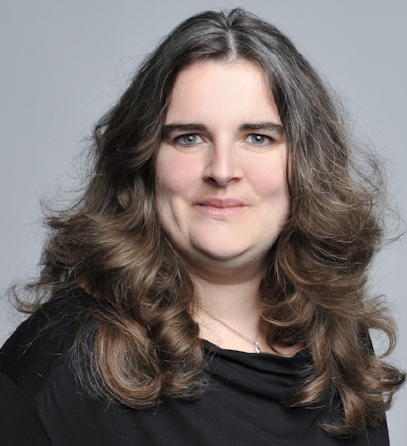
Nadya Ben Bekhti-Winkel is the co-lead of the Business Unit SPACE of Fraunhofer AVIATION & SPACE. As a physicist with many years of experience in the field of aerospace, she has a broad overview of key technologies and technology transfer potential for space applications, in-depth knowledge of project management, and an extensive national and international network.
 Philipp Laschke is a foresight scientist in the Business Unit Corporate Technology Foresight. With his background in innovation management, he conducts bibliometric, technology, and market-related analyses and provides methodological guidance on technology scouting, scenario analysis, and technology roadmapping.
 Leon Dehnhardt is a project manager at Fraunhofer AVIATION & SPACE’s Business Unit SPACE. As a psychologist, he has extensive knowledge and experience with research and scientific methodologies. While working at Fraunhofer AVIATION & SPACE, he has also gained a comprehensive understanding of the space sector and its technologies.
What is your organisation’s role in the project? What unique contribution does it bring to PCP WISE?
Fraunhofer AVIATION & SPACE offers in-depth technical and domain-specific expertise and promotes innovation in the areas of climate resilience, aerospace technology, and research progress. Fraunhofer AVIATION & SPACE provides sound scientific evaluation of technologies and advises on general issues. Using data-driven forecasting methods and desktop research based on publications and patent data, the project team identifies which technologies, institutions and innovations could be of particular interest to the project. To this end, Fraunhofer AVIATION & SPACE conducts quantitative and qualitative analyses using various methods. In addition to SOTA analysis, market trends and key players are analysed.
To what extent do you think PCP WISE will contribute to enhance Europe’s ability to adapt to and mitigate the effect of climate change?
Adaptation to climate change can only be achieved through joint societal efforts. PCP WISE addresses precisely this issue and pools Europe’s capabilities to provide interoperable, scalable and decision-supporting solutions tailored to the needs of public authorities and civil protection organisations. The ability to analyse long-term climate trends together with real-time risk data supports evidence-based policy-making, early warning and more effective disaster preparedness and response. Fraunhofer AVIATION & SPACE is going to contribute to this.
To what extent do you think Environmental Observation (EO) and Innovation Procurement (IP) can help develop innovative solutions for water management and climate resilience across Europe?
Environmental observation and innovation procurement make a significant contribution to the development of solutions for water management and climate resilience in Europe. EO provides high-quality, continuous, and scalable data from satellite, in-situ and model-based sources, enabling a better understanding of water-related risks such as floods, droughts, and water scarcity under changing climate conditions. Integrated into decision support systems, these data facilitate early warnings, risk assessments, and long-term planning. Innovation procurement links public needs with market-oriented innovations and supports the development of interoperable, user-oriented, and scalable solutions. The combination of EO and IP strengthens resilience, improves water management, and accelerates climate adaptation measures across Europe.


